This program is printable for your convenience.
Rocky Mountain Chorale Artistic Staff
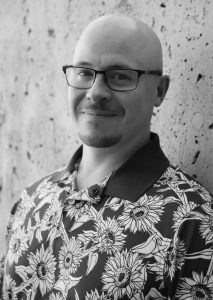
Jimmy was born and raised in Denver, Colorado. He began piano lessons at age seven after his parents heard him picking out tunes on the family piano. Jimmy began singing in high school after being urged to audition for the fall musical; he began singing in choir the next year and has remained in love with the choral experience ever since.
Jimmy received his B.A. in Music from Concordia University, where he studied piano with Ms. Patricia Riffel and conducting with Dr. Michael Busch. He recently received his Master’s Degree in Choral Conducting and Literature from the University of Colorado, Boulder, where he studied with Dr. Gregory Gentry and Dr. Andrea Ramsey. Jimmy has performed with the Denver Gay Men’s Chorus, the Collegium Musicum Early Music Ensemble at Regis University, and has conducted and sung with numerous church choirs throughout the Denver area. He is presently music educator at Lyons Middle/Senior High School. Jimmy served as Assistant Director for Rocky Mountain Chorale for two years and was appointed Director in 2017.
His experiences conducting and singing with community and church ensembles have provided him with unforgettable opportunities to share the enormously transformative power of singing in community. Jimmy’s excitement for choral music is unyielding and he believes the future holds unlimited potential for singing communities and their ability to enhance the human experience.
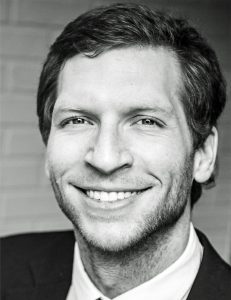
Parker Steinmetz, Assistant Director

Born in Greeley, Colorado, Parker began his musical journey as a clarinet player, though he quickly transitioned to the saxophone. He began singing in his church’s choirs in high school under the direction of Dr. Elmer Schock, and it was Dr. Schock’s nudging that inspired Parker to choose music as his college major.
Parker attended Hastings College in Hastings, Nebraska, where he studied saxophone under Dr. Debra McKim. After being coerced into auditioning for the Hastings College Choir, he quickly realized choral music was his true passion. He found a wonderful mentor in the choir’s director, Dr. Fritz Mountford.
Since moving back to Colorado in 2005, Parker has been an active church and community musician. In addition to directing several church music programs in northern Colorado, he has performed in the Greeley Chorale, the Greeley Chamber choir, the Kream of the Krop big band, and as a guest musician with Montview Westminster Choir for their performance of Dvorák’s Mass in D. He has performed under the direction of many fine conductors including Dr. Jill Burleson Burgett, Dr. Galen Darrough, Dr. Howard Skinner, and Dr. René Clausen. Parker is currently the Music Ministry Director at Longs Peak United Methodist Church in Longmont, Colorado. He joined the Rocky Mountain Chorale in January of 2022.
For over a decade, Walton Lott has explored and performed a diverse range of musical styles, from early Baroque music to works by contemporary composers. Deeply interested in different historical and social dimensions of musical practices, Dr. Lott holds certificates in Historical Keyboard Performance, Music Theory Pedagogy, and Musicology from the University of North Carolina at Greensboro. This entails rigorous and flexible interpretations of works on period and modern instruments that draw from coeval performance treatises and writings about aesthetics and music theory. The philosophical goal of these efforts is to craft a performance that presents the listener with a historically-contextualized reading of the musical score while also showcasing a unique individual interpretation of the work.
Simultaneously, Dr. Lott champions “newer” works, be they Modernist, avant-garde, Minimalist, or works by current composers, and has studied and performed works by Olivier Messiaen, Frederic Rzewski, Steve Reich, Julia Wolfe, Sean Friar, Carl Schimmel, Gyorgy Ligeti, Arnold Schoenberg, Alban Berg, and others.
In addition to solo music, Dr. Lott has long been a participant in collaborative music, playing for a wide range of ensembles and genres of music, including: church choirs, chamber music, orchestral ensembles, chorale ensembles, vocal and instrumental soloists, and jazz and rock ensembles.
Dr. Lott holds a Bachelor’s Degree from Millsaps College, where he studied under Dr. Lynn Raley and Dr. Rachel Heard. In 2012, Dr. Lott completed a Master’s Degree in Music at the University of North Carolina at Greensboro, studying under Dr. Andrew Willis, and has completed his Doctorate of the Musical Arts at the same institution.
Program
Jimmy Howe, conductor
Parker Steinmetz, assistant conductor
Walton Lott, pianist
Read Director’s Notes
The notion of performing a concert dedicated entirely to jazz came from RMC’s planned upcoming collaboration with Cantabile in the spring of 2027. Knowing that the subject matter of this collaboration will be emotionally taxing for performers and audience members alike, and in light of our more recent concerts that have explored similar emotional spaces, I wanted to share a concert that was more lighthearted and fun. I have always loved jazz, from the complex harmonies and catchy riffs to the improvisatory nature of the art form overall. In addition, I have always wanted to start an adult vocal jazz group, and this concert has become the perfect opportunity to dive into more of what I love.
Despite my excitement for this musical opportunity, I was struggling to come up with a way to unify this concert in a way that made sense. If you’ve come to an RMC concert before, you know that I like a theme to our concerts so that the music is connected by a through-line from the first note to the last. I didn’t want this concert to simply be a smattering of jazz pieces, and I wanted to make it more of an exploration of the overall art form since jazz itself isn’t limited to one style. Since I had planned to also teach some vocal improv for this concert, I knew I wanted to find a piece for SATB that was composed over the 12-bar blues, the “something blue” to which our concert title refers. Driving down 287 at 70 mph and listening to the blues, the title and inspiration for this concert suddenly clicked: something old, something new, something borrowed, and Something Blue.
Lullaby of Birdland
Soloists: Bella Becker, Sade Gutierrez
Music: George Shearing
Lyrics: George David Weiss (as B. Y. Forster)
Arrangement: Paris Rutherford
Lyrics
Lullaby of Birdland, that’s what I
always hear, when you sigh.
Never in my wordland could there be words to reveal,
in a phrase how I feel.
Have you ever heard two turtle doves
bill and coo, when they love?
That’s the kind of magic music we make with our lips
when we kiss!
And there’s a weepy old willow,
he really knows how to cry!
That’s how I’d cry in my pillow
if you should tell me farewell and goodbye.
Lullaby of Birdland whisper low,
kiss me sweet, and we’ll go
flyin’ high in Birdland, high in the sky up above
All because we’re in love!
Read Director’s Notes
SOMETHING OLD
Our concert begins with the “something old,” a set of four jazz standards that represent both swing and Latin idioms within the jazz canon. While there is no official governing body of defining standards, a song is considered a “jazz standard” due to its popularity and ubiquity in live performance and recordings. Lullaby of Birdland was composed in 1952 by jazz pianist George Shearing with lyrics later added by George David Weiss. In 1940’s/50’s jazz, Birdland (a jazz club named after Charlie “Bird” Parker) was the center of all things jazz in New York CIty. Shearing composed this song at the request of a disc jockey who was planning a live radio broadcast from the club and needed a theme song. Lullaby has been covered by many artists, including (and not limited to): The Manhattan Transfer, Count Basie and His Orchestra, Ella Fitzgerald, and Sarah Vaughan.
Moonglow
Music: Will Hudson
Lyrics: Eddie DeLange & Irving Mills
Arrangement: Darmon Meader
Lyrics
It must a’ been moonglow,
way up in the blue.
It must a’ been moonglow,
that led me straight to you.
I still hear you sayin’,
“Dear one, hold me fast.”
And I start in prayin’,
“Oh, Lord, please let this last.”
We seemed to float right through the air.
Heavenly songs seemed to come from everywhere.
And they’re singin’ to you, way up in the blue.
I always remember,
that moonglow gave me you.
Read Director’s Notes
Darmon Meader’s arrangement of Moonglow offers a contrast to the heavy swing of our first piece. Originally composed to be more of a dreamy ballad, the easy swing of this melody embodies the 1930’s romanticism of starry nights and slow dancing. The melodies of both Birdland and Moonglow are written with the same form of AABA in which the A sections present the main melodic hooks and preliminary embellishments while the B section of the melody serves as a bridge. “Lullaby’s” A section melodies are blocky in nature, composed to fill each 8-bar phrase, whereas “Moonglow” was constructed as a “riff tune” with short, repetitive, catchy rhythms. Contrary to the style of the time where the bridge of a song was typically high energy, Moonglow’s bridge is floaty and ethereal; the syncopated countermelodies in Meader’s arrangement also add to this “floaty” feeling.
Mas Que Nada
Soloists: Christina Shappacher, Denver Alexander
Music & Original Lyrics: Jorge Ben Jor
Arrangement: Steve Zegree
Lyrics
Oariá raiô
Obá obá obá
Mas que nada — Whatever
sai da minha frente — get out of the way
que eu quero passer, — that I wanna pass
pois o samba está animado, — because samba is really exciting
O que eu quero é sambar. — and I wanna dance (samba).
Este samba — This samba
que é misto de maracatu, — that is mixed with maracatu
É samba de preto velho, — old black samba
samba de preto tu.– black samba you.
Mas que nada– Whatever
um samba como este tão legal,– a samba like this is so nice
você não vai querer — you don’t want me
que eu chegue no final. — to get to the end.
Read Director’s Notes
The difference between Latin jazz idioms and swung idioms lies in the expression of the eighth notes. In swing styles, the eighth notes are unevenly stressed with the weight on the upbeat instead of the down (doo DA doo DA doo…etc) and in Latin jazz the eighth notes are evenly weighted, functioning as the rhythmic motor of the piece. In both fast and slow Latin styles the straight eighth note feel inspires a sway in the body (although it feels more like a true dance in fast tempos), and this sway is evident in our set of Latin standards.
Originally written by Jorge Ben Jor, Más que Nada is a combination of traditional Samba and more driven guitar rhythms. He was considered a rebel at the time for using a more percussive style of playing than that of the Bossa Nova style (a la “The Girl from Ipenema”). The song became an international hit when Sergio Mendez covered it with his band Brazill ‘66. He replaced the driving guitar with a more piano-led Bossa Nova feel and had female soloists as the lead vocals; this is the most widely recognized iteration of this song to date. Since then, Mas que Nada has been covered by Miriam Makeba, Ella Fitzgerald, The Tamba Trio, and yes, even the Black-Eyed Peas.
Bésame Mucho
Music & Lyrics: Consuelo Velázquez
Arrangement: Kirby Shaw
Lyrics
Bésame, bésame mucho, — Kiss me, kiss me a lot
como si fuera esta noche — as if tonight
la última vez. — were the last time
Bésame mucho, — Kiss me a lot
que tengo miedo a perderte — for I’m scared to lose you
perderte después. — lose you again
Quiero tenerte muy cerca — I want to have you close
mirarme en tus ojos — look at myself in your eyes
verte junto a mí, — see you together with me,
piensa que tal vez mañana — I think that maybe tomorrow
yo ya estaré lejos — I will already be far away
muy lejos de ti. — very far away from you.
Read Director’s Notes
“Bossa Nova” means “new wave” or “new style” and is derived from Samba but places more emphasis on the melody and harmony and less on the percussion groove of the style. Bossa Nova is a more intimate style of Latin jazz and can be described as smooth, laid back, mellow, or “cool,” and typically features moderate to slow tempos, conversational singing with no vibrato, and a steady, grounded, two-beat pulse of the bass alternating between the root and the fifth of each chord. The Bossa version of Besame Mucho is a perfect example of this relaxed Latin jazz groove. This song was originally written by Mexican songwriter Consuelo Velásquez as a Bolero supposedly inspired by “Quejas, o la Maja y el Ruiseñor,” a piano piece by Spanish composer Enrique Granados. The Bossa Nova adaptation was created by Joao Gilberto in 1977; he took the pleading, crying-out nature of the original and turned it into a quiet, intimate invitation. The arrangement by Kirby Shaw that RMC is performing maintains the austerity of the original melody by filling space with the other choral voices in an undecorated, supported manner.
From the Start
Soloists: Emmi Lindsey, Yinan (Nancy) Deng,
Anna Hansil
Music & Lyrics: Laufey
Arrangement: Michele Weir
Lyrics
Don’t you notice how
I get quiet when there’s no one else around?
Me and you and awkward silence.
Don’t you dare look at me that way.
I don’t need reminders of how you don’t feel the same.
Oh, the burning pain
Listening to you harp on ’bout some new soulmate:
“She’s so perfect, blah, blah, blah.”
Oh, how I wish you’ll wake up one day,
run to me, confess your love. At least just let me say
that when I talk to you, oh, Cupid walks right through
and shoots an arrow through my heart.
And I sound like a loon, but don’t you feel it too?
Confess I loved you from the start.
What’s a girl to do?
Lying on my bed, staring into the blue,
unrequited, terrifying.
Love is driving me a bit insane.
Have to get this off my chest,
I’m telling you today… (chorus)
Read Director’s Notes
SOMETHING NEW
The “something new” portion of our concert explores the way jazz styles have inspired and infiltrated traditional pop styles, translating long-standing jazz traditions into modern pop expressions. From the Start by Laufey is the perfect bridge between these two sections of our concerts as a pop song infused with “Old World” stylings. Set in a Boss Nova style, this song has similar musical features to that of “Besame,” like the grounded bass line and the cool, conversational melodic delivery. It differs from traditional Bossa in that the tempo is a bit faster, a necessary aspect for it to compete with modern pop. Like most pop music, “From the Start” has a catchy chorus and is structured much like the “riff song” technique of Moonglow. Vocal improvisation in jazz can come off as overly academic and inaccessible, but Laufey treats her scatting like a bridge, making it melodic and rhythmic and nearly as catchy as the chorus.
When the Party’s Over
Soloists: Anna Hansil, Gretchen Buhrke
Music & Lyrics: Finneas O’Connell
Arrangement: Kerry Marsh
Lyrics
Don’t you know I’m no good for you?
I’ve learned to lose you, can’t afford to.
Tore my shirt to stop you bleeding,
but nothing ever stops you leaving.
Quiet when I’m comin’ home, and I’m on my own.
I could lie, say I like it like that, like it like that.
Don’t you know too much already?
I’ll only hurt you if you let me.
Call me friend but keep me closer, (call me back)
and I’ll call you when the party’s over.
But nothing is better, sometimes,
once we’ve both said our goodbyes.
Let’s just let it go,
let me let you go.
Read Director’s Notes
The first half of our concert concludes with two vocal jazz arrangements by Kerry Marsh, former professor in the jazz studies program at the University of Northern Colorado (UNC) and currently the director of Jazz Singers and the Vocal Jazz Lab at the University of Kansas. His post-modern vocal jazz arrangements have been performed by groups all over the world and are the perfect example of the fusion between pop originals and the rhythmic and harmonic complexities of jazz music. Commissioned by Janice Vlachos for “Age of Guinevere” at Fairview High School, Billie Eilish’s When the Party’s Over serves as the debut performance of RMC’s select vocal jazz group (no name yet). The haunting, austere melody of Eilish’s original pairs beautifully with the lush, dissonant writing that Kerry Marsh employs in most of his arrangements. The original recording is harmonized with only four different chords, whereas the Marsh arrangement features a harmonic tapestry that adds complexity while maintaining the “hollow” spirit of the original.
The Weather
Soloists: Zoe Lewis, Denver Alexander, Marilyn Scott
Music & Lyrics: Clyde Lawrence & Gracie Lawrence
Arrangement: Kerry Marsh
Lyrics
I won’t talk about the weather,
not with you, we’re not together,
’cause even when the sky?is?grey, I’m feelin’?blue.
And though the winds are always?changin’
and the clouds are rearrangin’,
a part of me will always be in love with you.
There’s a fire in L.A.
and since you moved there back in May,
I wonder, should I call to see if you’re alright?
Yeah, you’re a million miles away,
but I still think of you each day
and hope the weather doesn’t keep you cold at night.
I won’t talk about the weather,
not with you, we’re not together,
and it’s hard to say if we will ever be.
But I’ll admit my greatest fear is that the air will never clear,
so I just wish that we could talk like you and me.
No, I won’t talk about the weather,
not with you, we’re not together,
but I wonder if we’re ever really through.
‘Cause if we’re talkin’ about whether,
you and I should be together.
Oh, I know I’ll always be in love with you.
Read Director’s Notes
Marsh’s creative harmonic language also shines in his arrangement of The Weather, originally written and performed by the funk duo Lawrence. This arrangement starts much like the original with a simplistic, lilting melody supported by stacked sounds of piano and long tones from the horn section. Lawrence is gifted in the art of “word painting”– composing music that does what the words describe. In this instance, Lawrence uses the diatonic minor chord to represent the “bad weather” of the relationship (“I won’t talk….) and shifts to the relative diatonic major chord at the more “sunny” melodic moments. True to form, Marsh has created an arrangement that honors the spirit of the original while adding some surprise gospel funk flare at the end.
Intermission
Dancin’ Fool
Music: Barry Manilow
Lyrics: Bruce Sussman and Jack Feldman
Arrangement: Kirby Shaw
Lyrics
When I hear a band blowin’ Basie,
I can count on losing my cool.
Take me where the rhythm is racy.
Let me be a dancin’ fool.
Some prefer the Café Europa,
sipping Dubonnet on a stool.
Me, I get my kicks at the Copa.
That’s where I’m a dancin’ fool.
I’ll show you some moves
smooth as satin
and others they don’t teach in school.
When that crooner starts into scattin’,
just give me a chance and
my tuxedo pants and
presto, I’m a dancin’ fool!
When those trumpets blare, man,
I ain’t got a care, man!
I’m like Fred Astaire, man… Cool!
Read Director’s Notes
SOMETHING BORROWED
The second half of our concert begins with two more pieces performed by our select vocal jazz ensemble. We open with Barry Manilow’s Dancin’ Fool, a song that blends big band swing with disco. Written in 1979, this song came out one year after his mega-hit “Copacabana.” It features a “four-on-the-floor” disco beat with a full brass band sound throughout. In our vocal jazz version, the singers take the place of the instruments during the bridge: sopranos as trumpets, altos as saxophones, and the tenors and basses as trombones.
Mr. Hooper’s Find It in a Minute Book
Soloists: Emily Cogsdill, Melissa Johnson, Ben Lewis, Ellen Henderson
Music & Lyrics: Rosana Eckert
Arrangement: Jeremy Fox
Lyrics
I have always been a little curious, wanting to know this and that.
Inquiry was fun!
I’d question all my friends and make them furious.
But now my battle with the unknown has been won.
If you want to know ‘bout philosophy,
or you want to learn to make a groovy cup of tea.
There’s only one place you need to look,
that’s in Mister Hooper’s Find It in a Minute Book.
If you want to read ‘bout the birds that fly,
or you want the recipe for Huckleberry pie.
You won’t believe how little time it took
when you read the Hooper Find It in a Minute Book.
And it’s guaranteed to be all you need.
Take my word indeed. Don’t be shy, baby, give it a try.
If you want a sure way to get a man,
or you’re with a woman you just cannot understand.
Believe me when I say it’s worth a look
into Mister Hooper’s Find It in a Minute Book!
And it’s guaranteed to be all you need.
Take my word indeed. Facts will fly in the blink of an eye.
If you want to name every stars above,
or you want to do the happy hippo dance of love.
Believe me when I say it’s worth a look
into Mister Hooper’s Find It in a Minute Book.
Read Director’s Notes
The small group’s final number for this concert is Jeremy Fox’s arrangement of Mr. Hooper’s Find It In a Minute Book. The song was originally composed by vocalist and songwriter Rosanna Eckert and is a tribute to the actor Will Lee who played Mr. Hooper on Sesame Street. The main melody is set to a complexified version of the 12-bar blues while the singers explore the various finds in Mr. Hooper’s book. Fox’s arrangement includes a bombastic shout chorus as well as opportunities for solos and improvisation.
A Little Jazz Mass
I. Kyrie
II. Gloria
III. Sanctus
IV. Benedictus
V. Agnus Dei
Composer: Bob Chilcott
Lyrics
| Kyrie | English translation |
| Kyrie, eleison. | Lord, have mercy. |
| Christe, eleison. | Christ, have mercy. |
| Gloria | |
| Gloria in excelsis Deo | Glory to God in the highest, |
| et in terra pax hominibus bonae voluntatis. | and on earth peace to people of good will. |
| Laudamus te, benedicimus te, | We praise you, we bless you, |
| adoramus te, glorificamus te. | we adore you, we glorify you. |
| Gratias agimus tibi propter magnam gloriam tuam. | We give you thanks for your great glory. |
| Domine Deus, Rex caelestis, | Lord God, heavenly King, |
| Deus Pater omnipotens. | O God, almighty Father. |
| Domine Fili unigenite, Jesu Christe, | Lord Jesus Christ, only begotten Son, |
| Domine Deus, Agnus Dei, Filius Patris, | Lord God, Lamb of God, Son of the Father |
| qui tollis peccata mundi, | who takes away the sins of the world, |
| miserere nobis. | have mercy on on us. |
| Qui tollis peccata mundi, | You take away the sins of the world, |
| suscipe deprecationem nostram. | receive our prayer. |
| Qui sedes ad dexteram Patris, | You are seated at right hand of the Father, |
| miserere nobis. | have mercy on us. |
| Quoniam tu solus Sanctus, | For you alone are the Holy one, |
| tu solus Dominus, | you alone are the Lord, |
| tu solus altissimus, | you alone are the Most High, |
| Jesu Christe, cum Sancto Spiritu, | Jesus Christ, with the Holy Spirit, |
| in gloria Dei Patris. Amen. | in the glory of God the Father. Amen. |
| Sanctus | |
| Sanctus, Sanctus, Sanctus | Holy, holy, holy, |
| Dominus Deus Sabaoth. | Lord God of hosts. |
| Pleni sunt caeli et terra gloria tua. | Heaven and earth are full of your glory. |
| Hosanna in excelsis. | Hosanna in the highest. |
| Benedictus | |
| Benedictus qui venit in nomine Domini. | Blessed is he who comes in the name of |
| Hosannah in excelsis. | The Lord. Hosanna in the highest. |
Read Director’s Notes
The crux of our “something borrowed” portion of the concert is Bob Chilcott’s A Little Jazz Mass. The piece includes the traditional Mass Ordinary – Kyrie, Gloria, Sanctus, Benedictus, and Agnus Dei – set to modern jazz grooves. Two seemingly disparate forms are beautifully combined through Chilcott’s masterful harmonic writing and sensitivity to the spirituality of the text. The melody of the Kyrie is set using a dorian scale, a scale used frequently in jazz for both composition and improvisation. The minor tonality reflects the imploring seriousness of the first petition of “kyrie eleison,” and the crescendo to each “Christe eleison” elicits the desperation of the second petition of “Christ, have mercy.” Often referred to as the “Hymn of the Angels,” the Gloria comes from Luke 2:14 in which a multitude of angels announce the birth of Christ to the shepherds. The rest of the text was later added to the movement as a hymn of praise. Chilcott’s setting captures the celebratory nature of the angel’s message with a crisp, uptempo swing that bookends the movement around a more solemn and reverent (yet still syncopated) setting of the intermediary text referencing the removal of sin from the world. The Sanctus is and has always been my favorite movement from this Mass setting. It’s comparable to Durufle’s setting from his Requiem in that it feels like a procession that builds to the arrival of the Lord. The harmony oscillates between the minor tonic and the major third, a technique that gives the sense of heaviness and lift simultaneously. After the initial statement of “Holy is the Lord,” the choir joins in unison to sing “heaven and earth are full of your glory” as the harmony rises in progression and tension to arrive at the tonic major on the word “hosanna.” The remainder of the movement oscillates between the tonic major and the subdominant major chord, aka the “Amen” cadence frequently sung after hymns of praise. The Benedictus in this setting is driven by the easy swing groove over an oscillating minor five-major one harmonic pivot. The scale is mixolydian–major with a flat seven–that exudes a sense of celebration and sophistication. The entire movement is set like a canon and culminates with a driving, homophonic “hosanna in excelsis.” The text of the Agnus Dei is a threefold petition for the absolvement of sin and request for peace. In Chilcott’s setting, the tension and drama are depicted through a lilting melody during the “Agnus dei” portion of the text – solo soprano in the first petition, soprano and alto duet in the second petition, crescendoing to a full-choir iteration to close the movement.
Stuck in the Middle
Soloists: Nathan Varghese
Music & Lyrics: Justin Binek
Arrangement: Justin Binek
Lyrics
Too tall to be short. Too short to be tall.
Too small to be big. Too big to be small.
Well, I’m stuck in the middle with no way out.
I’m stuck in the middle and there ain’t no doubt.
That I’m stuck in the middle, but at least I’m stuck here with you.
Too smart to be dumb. Too dumb to be smart.
Too tart to be sweet. Too sweet to be tart.
Well, I’m stuck in the middle neither here nor there.
I’m stuck in the middle and I’m goin’ nowhere.
Yes, I’m stuck in the middle, but at least I’m stuck here with you.
I can’t make up my mind to go left or right.
I can’t nap in the day or sleep through the night.
No, I’m stuck in the middle not the most or the least.
I’m stuck in the middle South of North, West of East.
I’m stuck in the middle, but at least I’m stuck here with you.
Too old to be young. Too young to be old.
Too cold to be hot. Too hot to be cold.
Well, I’m stuck in the middle and it ain’t no fun.
I’m stuck in the middle, but my song is done.
And I’m stuck in the middle, but at least I’m stuck here with you.
Read Director’s Notes
SOMETHING BLUE
I love to use the 12-bar blues to teach vocal improvisation due to its predictable form, simple harmony, and accessibility for beginning improvisers. When I teach the blues, I typically use a song that I learned from Dr. Leila Heil while in graduate school at CU Boulder. I didn’t want to use this song in performance and I was having trouble finding an SATB version of the blues for a choir performance. There are plenty of pop/rock settings of the blues, like Chuck Berry’s “Johnny Be Good” and Elvis’ “Hound Dog,” but I wanted to stay within the jazz confines of our concert theme, especially because I wanted to showcase the improvisation skills that our singers have learned. After a lot of searching, I discovered Justin Binek’s Stuck In the Middle, an original setting of the 12-bar blues that features all the hallmarks of the blues with a bit of twist in the lyric. Binek writes:
“Stuck in the Middle” is an original blues that I wrote as an audition selection for the Kansas City Jazz Orchestra’s “Riff Generation” ensemble. Part of the audition process was to write a riff-based blues melody that incorporated the classic “Route 66” stop-time break…While most blues tunes have sad and sorrowful lyrics, I lead a generally happy life, so I decided to go for more of a quirky approach to the lyric, all playing on the theme of being “stuck in the middle.”
May the Road Rise Up to Meet You
Soloists: Jack Harless
Composer/Arranger: Derric Johnson
Lyrics
O may the road rise to meet you,
and may the wind be at your back,
and may God’s own sunshine be warm upon your face,
and may His rain fall softly on your fields.
And then until we meet again,
may God safely hold you in the palm of his hand.
Read Director’s Notes
While I like ending a concert on a high note (pardon the pun), I wanted to conclude this concert with a musical “hug” where the choir surrounds the audience during the final song. Again, I had cornered myself with this challenge: a song that’s uplifting, lush, and suitable in an acapella surround-sound setting for this kind of moment. After coming up empty after hours of searching, I decided to look up one of my favorite arrangers, Derric Johnson. Among his many musical achievements, one of the most notable (and my favorite) is his thirty-three-year long service as Creative Consultant to for Walt Disney World where he arranged and produced Epcot Center’s The Voices of Liberty, His arrangement of May the Road Rise Up to Meet You features his trademark lush, nostalgically chromatic writing that sounds like the classic Disney movies of old. Until we meet again!
Rocky Mountain Chorale Members
Soprano 1
Eileen Christofferson
Emily Cogsdill
Anna Hansil
Megan Rogers
Leslie Schumacher
Christie Swoboda
Alix Vezina
Katherine Ware-Wolniewicz
Ady Zavala
Soprano 2
Yinan (Nancy) Deng
Nathalie Bleuzé
Ruth Bleuzé
Claire Douglas
Linda Hattel
Emmi Lindsey
Christina Schappacher
Annie Scott
Marilyn Scott
Elizabeth Tyson
Alto 1
Gretchen Buhrke
Riven Evenson
Dianne Ewing
Katie Goff
Pam Guthrie
Sade Gutierrez
Chelsea Haag-Fernandez
Melissa Johnson
Zoe Lewis
Amanda Paolucci
Beth Reid
Pam Sjoerdsma
Gini Sykes
Alto 2
Isabella Becker
Nancy Belkov
Susan Bryant
Jeanne Clifton
Betsy Feldman
Julie Hale
Cathy Jenni
Caren King
Cécile Penland
Tenor 1
Ze (zee) Gibson
Benji Archer
Mich Atomic
Ellen Henderson
James Lockhart
Nathan Varghese
Tenor 2
Denver Alexander
Paul Gibb
Burke Green
Bill Liggett
Merlin Mulligan
Phil Weber
Baritone
Reed Bailey
Rolan Christofferson
Sam Hahn
Tom Hunt
John Lee
Ben Lewis
Keiran McGee
Kelly McKee
Bass
Jack Harless
Paul Hartman
Bob Hopper
Erik Jensen
Justice Wiley
Small Group
Denver Alexander
Nancy Belkov
Susan Bryant
Gretchen Burke
Jeanne Clifton
Emily Cogsdill
Anna Hansil
Ellen Henderson
Jimmy Howe
Erik Jensen
Melissa Johnson
Ben Lewis
Emmi Lindsey
Kelly McKee
Christina Schappacher
Marilyn Scott
Pam Sjoerdsma
Justice Wiley
Welcome and Land Acknowledgement
Founded in 1978, Rocky Mountain Chorale (RMC) is one of the Boulder area’s oldest and finest community choirs. Thank you for joining us.
As we gather, we acknowledge that we are on the ancestral homelands and unceded territory of Indigenous Peoples who have traversed, lived in and stewarded the lands of Boulder County. The Indigenous Nations include the Cheyenne, Arapaho, Ute and many other Native American nations who were removed unjustly, and that we in this community are the beneficiaries of that removal. We honor them as we gather here to engage as a community to work toward healing and develop a culture of inclusion through music.
Please silence your cell phones and other electronic devices during the concert.
Thank you.
Support RMC
RMC has been a source of joy, inspiration, and community for nearly 50 years. Our work isn’t possible without the generous support of donors like you. Every contribution – of ideas and imagination, of time, energy, and resources – is a crucial part of our success. Your generosity helps us move our community forward in tangible, exciting, and lasting ways. Please consider giving a gift to support RMC.
Individual donations can be made by clicking here.
Rocky Mountain Chorale is a 501(c)(3) organization. All contributions are tax deductible.
Thank You!
The Rocky Mountain Chorale would like to extend a special thank you to the following individuals and organizations for their generous contributions.
Advertisements: Anna Hansil
Grants: Pamela Puhl-Quinn, Marilyn Scott, & Ellen Henderson
Program: Christie Swoboda
Lyric Sheet: Pam Sjoerdsma
Rehearsal Tracks: Walton Lott
All Ticket Table / Ushers including Betty Rasmussen, Amine Tarhini and Sunset Middle School National Junior Honor Society
Section Leaders: Christina Schappacher – Soprano, Pam Sjoerdsma – Alto, Ellen Henderson – Tenor, Erik Jensen – Bass
Venue Coordinator: Kelly McKee
Promotional Materials: Jack Harless
Volunteer Coordinator: Kelly McKee
Grace Commons Church
Heart of Longmont Methodist Church
Valmont Community Presbyterian Church
RMC Board of Directors
- Anna Hansil, President
- Gini Sykes, Vice President
- Kelly McKee, Secretary
- Pam Puhl-Quinn, Treasurer
- Jack Harless, Marketing Lead
- Sean Goralski, Tech Master
- Christie Swoboda, Webmaster
The Board of the Rocky Mountain Chorale would also like to thank all the members of the Chorale, not only for their commitment to making beautiful music but also for doing the multitude of volunteer jobs that support this wonderful non-profit. From taking on board positions to coordinating tasks and outreach concerts to setting up risers and helping out with other miscellaneous tasks, the community effort is what makes it work. Thank you all for your contributions!
We gratefully acknowledge our donors!
Individuals
Denver Alexander
Benji Archer
Erika Archer
Judith Auer
L Reed Bailey
Nancy Belkov
Nathalie Bleuze
Ruth Bleuze
Susan Bockhoff
Susan Bryant
Dennis and Lisa Buechler
David Butler
Eileen & Rolan Christofferson
Emily Cogsdill
Joyce Costello
Linda DeGolier
Rebecca Dickson
Jack Doggett
Paul Doherty
Nancy Eastman
Sue Erickson
Dianne Ewing
Betsy Feldman
Sarah Frank
Patricia Gaggiani
Gay & Paul Gilbertson
Sean Goralski
Burke Green
Guthrie Charitable Fund
Julie & Jeff Hale
Peter Hall
Anna Hansil
Leslie Hartten
Linda Hattel
Ellen Henderson
Jeffrey Joe Hinton
Tom Hunt
Catherine Jenni
Erik Jensen
Melissa Johnson
Jesse Kruse
Lois Labanoski
George Lawrence
John Lee
Ben Lewis
Janni Little
Terry Mattison
Keiran McGee
M McGee
Kelly McKee
Heather McLaughlin
David and Kay Norris
Ann Oglesby
Codi Oreck
Kyla Palmer
David & Celia Powell
Pamela Puhl-Quinn
Betty & Doug Rasmussen
Beth Reid
Katherine Rice
Megan Rogers
Satori Capital, LLC
Carol Saunders
Beth Sawyer
Christina Schappacher
Susan Secord
JoAn Segal
Elizabeth Shaw
Pam Sjoerdsma
Anthony Stalion
Christie Swoboda
Ryan Theurer
Elizabeth Tyson
Bibi Vellandi
Babs Steinmetz Wagner
Philip F. Weber
Kathleen Windor (Estate of)
Katherine Wolniewicz
Alicia Yoho
Corporations
Kroger / King Soopers
Lumen Technologies
Medtronic
Mod Market
RaiseRight
Grants
Boulder County Arts Commission
Scientific and Cultural Facilities District