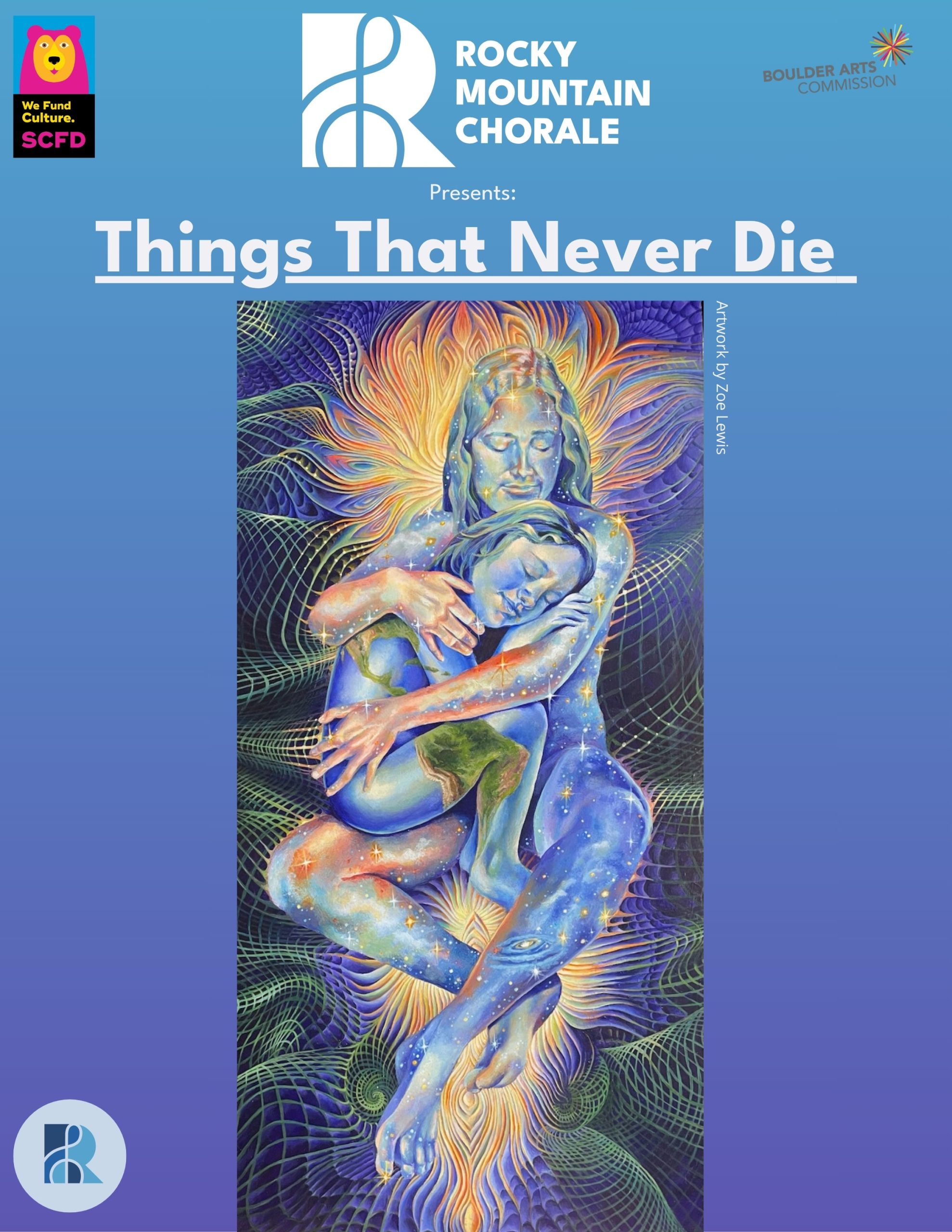
This program is printable for your convenience.
Rocky Mountain Chorale Artistic Staff
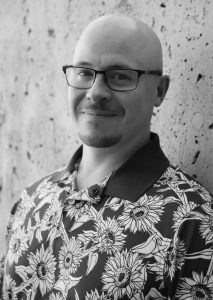
Jimmy was born and raised in Denver, Colorado. He began piano lessons at age seven after his parents heard him picking out tunes on the family piano. Jimmy began singing in high school after being urged to audition for the fall musical; he began singing in choir the next year and has remained in love with the choral experience ever since.
Jimmy received his B.A. in Music from Concordia University, where he studied piano with Ms. Patricia Riffel and conducting with Dr. Michael Busch. He recently received his Master’s Degree in Choral Conducting and Literature from the University of Colorado, Boulder, where he studied with Dr. Gregory Gentry and Dr. Andrea Ramsey. Jimmy has performed with the Denver Gay Men’s Chorus, the Collegium Musicum Early Music Ensemble at Regis University, and has conducted and sung with numerous church choirs throughout the Denver area. He is presently music educator at Lyons Middle/Senior High School. Jimmy served as Assistant Director for Rocky Mountain Chorale for two years and was appointed Director in 2017.
His experiences conducting and singing with community and church ensembles have provided him with unforgettable opportunities to share the enormously transformative power of singing in community. Jimmy’s excitement for choral music is unyielding and he believes the future holds unlimited potential for singing communities and their ability to enhance the human experience.
Parker Steinmetz, Assistant Director
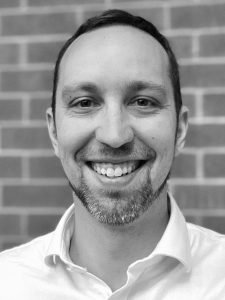
Born in Greeley, Colorado, Parker began his musical journey as a clarinet player, though he quickly transitioned to the saxophone. He began singing in his church’s choirs in high school under the direction of Dr. Elmer Schock, and it was Dr. Schock’s nudging that inspired Parker to choose music as his college major.
Parker attended Hastings College in Hastings, Nebraska, where he studied saxophone under Dr. Debra McKim. After being coerced into auditioning for the Hastings College Choir, he quickly realized choral music was his true passion. He found a wonderful mentor in the choir’s director, Dr. Fritz Mountford.
Since moving back to Colorado in 2005, Parker has been an active church and community musician. In addition to directing several church music programs in northern Colorado, he has performed in the Greeley Chorale, the Greeley Chamber choir, the Kream of the Krop big band, and as a guest musician with Montview Westminster Choir for their performance of Dvorák’s Mass in D. He has performed under the direction of many fine conductors including Dr. Jill Burleson Burgett, Dr. Galen Darrough, Dr. Howard Skinner, and Dr. René Clausen. Parker is currently the Music Ministry Director at Longs Peak United Methodist Church in Longmont, Colorado. He joined the Rocky Mountain Chorale in January of 2022.
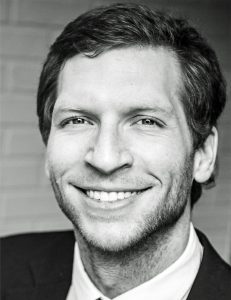
For over a decade, Walton Lott has explored and performed a diverse range of musical styles, from early Baroque music to works by contemporary composers. Deeply interested in different historical and social dimensions of musical practices, Dr. Lott holds certificates in Historical Keyboard Performance, Music Theory Pedagogy, and Musicology from the University of North Carolina at Greensboro. This entails rigorous and flexible interpretations of works on period and modern instruments that draw from coeval performance treatises and writings about aesthetics and music theory. The philosophical goal of these efforts is to craft a performance that presents the listener with a historically-contextualized reading of the musical score while also showcasing a unique individual interpretation of the work.
Simultaneously, Dr. Lott champions “newer” works, be they Modernist, avant-garde, Minimalist, or works by current composers, and has studied and performed works by Olivier Messiaen, Frederic Rzewski, Steve Reich, Julia Wolfe, Sean Friar, Carl Schimmel, Gyorgy Ligeti, Arnold Schoenberg, Alban Berg, and others.
In addition to solo music, Dr. Lott has long been a participant in collaborative music, playing for a wide range of ensembles and genres of music, including: church choirs, chamber music, orchestral ensembles, chorale ensembles, vocal and instrumental soloists, and jazz and rock ensembles.
Dr. Lott holds a Bachelor’s Degree from Millsaps College, where he studied under Dr. Lynn Raley and Dr. Rachel Heard. In 2012, Dr. Lott completed a Master’s Degree in Music at the University of North Carolina at Greensboro, studying under Dr. Andrew Willis, and has completed his Doctorate of the Musical Arts at the same institution.
Program
Jimmy Howe, conductor
Parker Steinmetz, assistant conductor
Walton Lott, pianist
Read Director’s Notes
In light of the weighty, contemplative nature of RMC’s most recent concerts, I wanted this concert to
be a bit more inspiring and uplifting overall. I originally described my goal for this concert to be
“words to live by;” a concert full of words that could act as guides for inspiration, reflection, awe, and
words that would uplift performer and listener alike in acknowledging and pursuing their own
unlimited human potential. As a result, this concert is a combination of words that I have lived by and
that RMC have sung previously, as well as new words in new songs that have challenged, comforted,
and inspired me. These songs are indeed words to live by, but they are also words to share, and we
are thankful for the opportunity to do so with you this evening.
Measure Me, Sky
-Elaine Hagenberg
Lyrics
Measure me, sky!
Tell me I reach by a song
Nearer the stars;
I have been little so long.
Horizon, reach out!
Catch at my hands,
stretch me taut,
Rim of the world:
Widen my eyes by a thought.
Sky, be my depth,
Wind, be my width
and my height,
World, my heart’s span;
Loveliness, wings for my flight.
-Leonora Speyer
Read Director’s Notes
Our concert begins with Elaine Hagenberg’s Measure Me, Sky, an expansive and breathtaking setting of the poem by Leonora Speyer. The language of the poem is expansive, pushing the reader beyond their current station. The composer describes the piece in her own words:
Poetry is often the inspiration for the music I compose. Each piece begins by
carefully studying the words, speaking the rhythms, and listening for melodies that
will help to convey a story. I want singers and audiences alike to see themselves
inside the music—guided by the melodies and the text as one.
The effect of the poetry in Measure Me, Sky! is instantaneous. It’s as if one’s arms
have been cast wide, and their eyes turned to the heavens to take in the expanse
both around and above. By opening with accented arpeggios that immediately rise
into billowing triplet figures, I wanted to launch singers into flight and invite
listeners into the same breathless exclamation.
I was also inspired to learn that Leonora Speyer first started writing poetry in her
forties—not as a young girl. By composing an ascending key change for the final
refrain, a new harmonic world is revealed, calling us to venture into the unknown to
discover our limitless potential.
The most important line in the text is “I have been little so long.” After acknowledging our smallness and, possibly, stuckness, we are invited to reach, stretch and soar on wings of loveliness.
Responsibility
-Mark Sirrett
Lyrics
from Pirkei Avot (1:14)
Im ein ani li, mi li?
Uch’she-ani l’atsmi, mah ani?
V’im lo achshav, eimatai?
If I am not for myself, Who will be for me?
But if I am only for myself.
What am I?
And if not now, when?
Read Director’s Notes
After realizing our smallness and imploring the world to stretch us beyond our limits, our concert turns to a moment of introspection. Big realizations require big questions of ourselves if we intend to transcend what has kept us “little so long,” questions like, “Why have I been little so long?” “What got me to this point?” “What got me stuck?” Written in both Hebrew and English, Mark Sirret’s Responsibility poses three crucial questions that challenge the reader to move beyond themselves:
“If I am not for myself, who will be for me? But if I am only for myself, who am I? And if not now, when?” Judith Clurman, editor of the “Rejoice: Honoring the Jewish Spirit” choral music, writes:
Hillel the Elder, a famous Jewish leader and scholar, was born in Babylon. He lived in
the first century BCE to the beginning first century CE. He was a Pharisaic leader of
the most prominent school of Torah interpretation. Many of Hillel’s teachings are
found in Pirkei Avot (Chapters of the Fathers) in the Mishnah (early 3rd century
compilation of Oral Law). In this aphorism, Hillel captures the tension between the
need for healthy narcissism (self-care) and the importance of caring for others —
without procrastinating.
Mark Sirret’s setting of these words is set in a folk-like idiom that is simple, yet expressive, as a means to capture the humble, inner questioning of the text.
Wanting Memories
-Ysaye Barnwell
Lyrics
I am sitting here wanting memories to teach me
To see the beauty of the world through my own eyes.
You used to rock me in the cradle of your arms, You said you’d hold me till the pains of life were gone.
You said you’d comfort me in times like these and now I need you, And now I need you, and you are gone.
And I am sitting here wanting memories to teach me To see the beauty of the world through my own eyes.
I thought that you were gone, but now I know you’re with me; you are the voice that whispers all I need to hear.
I know a “please,” a “thank you,” and a smile will take me far, I know that I am you and you are me and we are one, I know that who I am is numbered in each grain of sand, I know that I’ve been blessed again and over again.
—Ysaÿe M. Barnwell
Read Director’s Notes
Time
-Jennifer Lucy Cook
Lyrics
Time, you can spend it, when you spend it then you’re running out of
Time, you can save it but to save it is to take a little
Time, in a minute, when you’re in it, can you feel the passing
Time is an illusion, there’s confusion when they tell you now it’s Time
Time to work and time to waste and there’s no
Time left to hold her, time to tell him how you feel while there’s still
Time, three two one eleven thirty, two AM, then dinner
Time now to kill, I said I will and still it flies and flies. oh
Time
Read Director’s Notes
Regarding the people (and puppies) that I love the most, I like to say that there’s always enough time for them and never enough time with them. Jennifer Lucy Cook’s Time echoes this sentiment through a frantic flurry of never-ending sixteenth notes and a poem that rolls on despite the loss of words as the piece progresses. The composer describes the piece in her own words:
Time, like money or borders between one country and another, is one of those funny human-made concepts that dictate our lives but are fundamentally meaningless if we didn’t all agree to go along with it. And yet, we experience aging, the changing of seasons, and growth, undeniably. The line between time’s reality and its invention is blurry, and there was no better way I could think of to depict that than by writing a repeating lyric that erodes as the piece unfolds. As lyrics disappear, phrases take on new meaning, like the way a 30th birthday differs from a fifth birthday, or how old memories can appear sharper than yesterday’s. We lose time when we try to keep it, we spend time as we try to save it – and since it insists upon eluding us, we can only notice the fact that time has been winging at us all along. This wit, this relentlessness, and this freedom is the spirit behind Time, and this piece is my way of winking back.
I Had No Time to Hate
-Nathan Howe
Lyrics
Emily Dickinson
I had not time to Hate
Because
The Grave would hinder me
And life was not so
Ample I
Could finish – Enmity
Nor had I time to Love
But since
Some industry must be
The little Toil of Love
I thought
Be large enough for me
Read Director’s Notes
One of my favorite bands from the 2010’s was a group from the UK called Noah and the Whale. Their lead singer and songwriter had a tremendous way of crafting words that hit the heart through the innocuous and accessible delivery of indie rock music. One of my favorite songs of theirs is called “Give a Little Love.” My favorite lyric comes at the end of the song: “
Well, if you are (what you love) / And you do (what you love) / I will always be the sun and moon to you / And if you share (with your heart) / Yeah, you give (with your heart) / what you share with the world is what it keeps of you.”
I still regularly listen to this song because it reminds me of how full life can be when it’s filled with love. When I’m faced with a tough choice, the words remind me to choose with love because, ultimately, love is how I participate in eternity since love is what the world keeps of me. Set to a poem by Emily Dickinson, Nathan Howe’s I Had No Time to Hate expresses a similar sentiment and an equal charge to pursue love. The poet states that life isn’t big enough to hold hate, nor is it long enough to fill with love, but since something must be done with our time, love is big enough to fill the time we have.
Invictus
Soloists: Anna Hansil and Sarah Frank
Cello: Sean Goralski
-Joshua Rist
Lyrics
Invictus by William Ernest Henley
Out of the night that covers me, Black as the Pit from pole to pole, I thank whatever gods may be For my unconquerable soul.
Beyond this place of wrath and tears Looms but the Horror of the shade, And yet the menace of the years Finds, and shall find, me unafraid.In the fell clutch of circumstance
I have not winced nor cried aloud.
Under the bludgeonings of chance My head is bloody, but unbowed.
It matters not how strait the gate, How charged with punishments the scroll.
I am the master of my fate:
I am the captain of my soul.
Read Director’s Notes
In my own pursuit of growth and self-discovery, I’ve come across a mindset teacher who frequently uses this line of questioning when working with a client:
“What is a story made of? Words. And where do those words live? In our heads. If that’s the case, why don’t we change the words?”
I love this line of questioning because, well, he’s right, and as someone who frequently gets spun up in their own internal narrative, his questions have given me a tool to make a more productive space between feeling something and taking action. When my students are preparing for an important audition, I like to remind them of Brene Brown’s research on the emotions of nervousness and excitement from her book “Atlas of the Heart.” She explains that the physical feelings in our bodies for these two emotions are identical: the jittery feelings, butterflies, the tight muscles, and the anticipation of what’s next. I remind my students that they can feel nervous and excited at the same time. They can tell themselves they are nervous because they care, because they want to do well, because they’re auditioning for strangers, and because they really want the opportunity. They can tell themselves they can be excited because they have a chance of earning an awesome opportunity, because they love to sing or perform, and that they are the only person with their unique voice and life experiences – they have something to offer a song/role that only they can do, and that is to be celebrated. The words we talk to ourselves with matter, but we often default to the narratives that we’ve repeated or inherited and we ultimately become trapped in the stories we tell ourselves.
The first half of our concert closes with a setting of the poem Invictus written by William Ernest Henley, a man who refused to compound his physical suffering by repeating to himself how dire his situation truly was. Joshua Rist, the composer of this setting of Henley’s poem, writes:
William Ernest Henley fought a lifelong battle for his health, contracting tuberculosis of the bones as a child that necessitated the amputation of his left leg below the knee. When the disease later spread to his other leg and his doctors insisted on removing it as well, Henley challenged their diagnosis and sought a second opinion. His pursuit led him to meet Dr. Joseph Lester, a pioneer in the development of antiseptic surgery. After an arduous twenty-month hospital stay at the Royal Infirmary of Edinburgh, Henley’s leg was saved and his health–at least partially–was restored. During his confinement, he recorded his impressions in his collection of poems In Hospital. It was there he penned his most famous work, Invictus (Latin for “invincible,” or “unconquerable”).
As crippling as Henley’s struggle with disease was, it is apparent that it did not get the best of him. Friends described him as radiant, larger-than-life-character, with a great red beard, clever wit, and “a laugh that rolled like music.” 19th-century poetry critic Arthur Symons wrote, “Mr. Henley, [out] of all the poets of the day, is the most strenuously certain that life is worth living, the most eagerly defiant of fate, [and] the most heroically content with death.”
Intermission
Twainsong
–Andrea Ramsey
Lyrics
Rules of Engagement
Never argue with stupid people.
They will drag you down to their level and beat you with experience.
Both places
I don’t like to commit myself about heaven and hell You see. I’ve got friends in both places.
Anger Management
When angry, count to four. When very angry, swear.
On Knowledge
It ain’t what you don’t know that gets you into trouble. It’s what you know for sure that just ain’t so.
Suppose
Suppose you were an idiot, and suppose you were a member of Congress. But I repeat myself.
Gentlemen and Banjo
A gentleman is someone who knows how to play the banjo and doesn’t.
Read Director’s Notes
I like to joke and tell my singers that my love language is sarcasm. As someone who considers themself fluent in said language, I resonate well with the comical writing of Mark Twain. We open the second half of our program with TwainSong, a group of six miniatures set to six of his satirical aphorisms. In a concert program full of words to live by, Andrea Ramsey’s settings of these words remind me not to take myself too seriously.
Things That Never Die
-Lee Dengler
Lyrics
The pure, the bright, the beautiful that stirred our hearts in youth, The impulses to wordless prayer. The streams of love and truth, The longing after something lost, The spirit’s yearning cry, The striving after better hopes; These things can never die. The timid hand stretched forth to aid a brother in his need, A kindly word in grief’s dark hour that proves a friend indeed; The plea when justice threatens high, The sorrow of a contrite heart; The things shall never die. Let nothing pass, for ev’ry hand must find some work to do, Lose mot a chance to waken love; Be firm and just and true, So shall a light that cannot fade beam on thee from on high, And angel voices say to thee; These things can never die.
-Charles Dickens
Read Director’s Notes
I have always loved Lee Dengler’s Things That Never Die and have been eager to find an opportunity for RMC to sing it. The song is set to a poem by Charles Dickens, but I’ve recently learned that this attribution is inaccurate and that it has been attributed to Ebenezer Cobham Brewer. This said, the most likely author was Sarah Doudney, an English fiction writer and poet alive at the same time as the aforementioned men (believe me when I say that this created quite the rabbit hole of origin pursuit…). The misattribution is likely due to the shared motifs/morals of enduring humanitarianism that permeated the works of Charles Dickens. In addition, poems of the 19th century were widely copied and distributed in anthologies and newspapers of the time and authorship errors were quite frequent. Regardless of the true authorship, the words of this poem attempt to make tangible the things that are intangible, but that leave impressions on the soul: the pure, the bright, the beautiful that moved our hearts, the outreached hand, the wakening of love. Perhaps it’s correct to say, as the soul is intangible, so are the things that move it? We can’t touch, smell, see, or always hear the things this piece references, but we can undoubtedly feel them.
I Believe
Soloist: Emily Cogsdill
-Mark Miller
Lyrics
I believe in the sun
Even when, even when it’s not shining
I believe in love
Even when, even when I don’t feel it
I believe in God
Even when, even when God is silent
Read Director’s Notes
Continuing in the theme of “intangible yet real,” we continue our concert with Mark A. Miller’s I Believe. This music is set to an anonymous poem inscribed in a cellar wall in Cologne, Germany, where Jews were hidden from the Nazis in World War II. In times of trial, words of hope are often the only things that can get us through. The poet states that they believe in the sun, God, and love even when it seems these things are not present. That just because we cannot see them and feel them doesn’t mean they don’t exist. Miller’s setting of these words is simple, yet powerful, much like the poem itself. It begins with a simple statement of the melodic motif and expands in dynamic as the poem progresses.
Hold Fast to Dreams
-Susan Labarr
Lyrics
Hold fast to dreams
For if dreams die
Life is a broken-winged bird
That cannot fly.
Hold fast to dreams
For when dreams go
Life is a barren field
Frozen with snow.
Read Director’s Notes
Hope is the central theme to the second half of our concert, and we continue to examine it with the words of Langston Hughes. Hughes was a pioneer of “jazz poetry;” he sought to portray the real lives of African-American people—both the joy and the suffering—in a way that was authentic and accessible. This poem was written during the Harlem Renaissance, a time in which many African-Americans sought to move from the South to Northern cities in an effort to escape Jim Crowe Laws. The message of Hughes’ poem is both universal and specific; it is a rallying cry for the community to maintain hope (“hold fast to dreams”) in the face of adversity. Susan Labarr’s setting of Hold Fast to Dreams echoes the sentiment of the author with a melody that withholds resolution until its final note, implying that dreams must be sustained and pursued until they are fully realized.
Over the Rainbow
–-arr. Mark Hayes
Lyrics
When all the world is a hopeless jumble
And the raindrops tumble all around
Heaven opens a magic lane
When all the clouds darken up the skyway
There’s a rainbow highway to be found
Leading from your window pane
To a place behind the sun
Just a step beyond the rain
Somewhere over the rainbow
Way up high
There’s a land that I heard of once in a lullaby
Somewhere over the rainbow
Skies are blue
And the dreams that you dare to dream
Really do come true
Someday I’ll wish upon a star
And wake up where the clouds are far behind me
Where troubles melt like lemon drops
Away above the chimney tops
That’s where you’ll find me
Somewhere, over the rainbow
Bluebirds fly
Birds fly over the rainbow
Why, then, oh, why can’t I?
If happy little bluebirds fly
Beyond the rainbow
Why, oh, why can’t I?
Read Director’s Notes
With the knowledge that dreams are worth our pursuit, our concert continues with Mark Hayes’ arrangement of Somewhere Over the Rainbow. Originally featured in “The Wizard of Oz,” the lyrics to this song imply a longing of what can be in spite of what is. In our previous song, Langston Hughes admonishes the listener to “hold fast to dreams” so they don’t die, but in this song, Dorothy urges us to follow those dreams to where they might inevitably lie, regardless of the intended outcome. While the end of the rainbow is never really within our reach, the lyric “If happy little bluebirds fly beyond the rainbow, why can’t I?” urges the listener to pursue their dreams to whatever end may result. The salient popularity of this beloved melody hinges on two ideas according to composer Rob Kapilow. He explains that “there’s really only two ideas. One of them, I call leap. The other one, I call circle and yearn.” The opening leap of an octave is quite rare for popular music and producers were fearful that the song would not be marketable due to the technical requirements this leap demands of the voice. This leap also represents Dorothy’s yearning for two worlds, for home and for adventure. Kapilow continues, “The only other idea is circle and yearn. So, you start on a note, you circle back to it, and then you yearn. That’s it, circle and yearn.” The remainder of the melody consists of three leaps, each smaller than the last and resolving closer and closer to the “home” note of the chorus.
Bayanihan
–-Arianne Abela
Lyrics
Text
Sama sama tayo
Sa fiesta at trabaho
Kaibigan o pamilya
Siguradong masaya tara na tara na
Bayanihan
Sa hirap at ginhawa
Dahan dahan ang paglipat
Kayang kaya ang pagbuhat
Sandali lang, tapos na Balita ko may lilipat Tawagin ang lahat Ang bayan ay tutulong Sa paglipat at angat ayasian, Bayanihan
lagtulunga
lagsay
Kain na sayaw na malkana
salamat walang anuman
Bayanihan
Translation
Let’s all be together In celebration or at work
Friend or family
It surely will be fun
Come on, come on
Bayanihan
In hardship or in good times
Slowly we make the move
Carrying is so easy
In a moment we are done
I heard that someone’s moving
Call everyone to come
The community will help us With the lifting and the move Bayanihan, Bayanihan
Get together
Help one another
Celebrate and have fun
Eat already
Dance already
Join already
Come here already
Thank you
No problem!
Bayanihan
-Barbara Abela
Read Director’s Notes
Until this moment we have recognized many important “words to live by:” words that inspire, comfort, grieve, remind, and stretch. Ultimately, these kinds of words are best shared in community where everyone can find a safe place to feel and express them. To this end, Arienne Abela’s Bayanihan serves as a perfect culmination of all that we’ve sung about in our concert this evening. In her words:
Bayanihan is derived from the Filipino word “bayan” meaning nation, town, or country. This term refers to a Filipino tradition where people in a town or community are asked to help a relocating family. The relocation is not just belongings but the actual transfer of a house to a new location. To thank people, the family throws a party with food and dancing. Today, bayanihan, in spirit means helping others in need without expecting anything in return.
Ultimately, the words and moments we choose to share with the people around us matter. Whether colleague, friend, or family, we have the opportunity and charge to uplift ourselves and our compatriots with words that inspire, challenge, and stretch us to become the best version of ourselves. Our hope is that you have been inspired to change, grow, and discover through the words that we have shared with you tonight. Go, make music, and make the world a better place with your voice in it!
Rocky Mountain Chorale Members
Soprano 1
Eileen Christofferson
Emily Cogsdill
Sarah Frank
Anna Hansil
Megan Rogers
Christie Swoboda
Marilyn Scott
Roberta Shanahan
Alix Vezina
Katherine Ware-Wolniewicz
Ady Zavala
Soprano 2
Nathalie Bleuzé
Ruth Bleuzé
Claire Douglas
Susan Duncan
Linda Hattel
Heather McLaughlin
Christina Schappacher
Elizabeth Tyson
Alto 1
Riven Evenson
Dianne Ewing
Pam Guthrie
Sade Gutierrez
Chelsea Haag-Fernandez
Melissa Johnson
Zoe Lewis
Amanda Paolucci
Beth Reid
Pam Sjoerdsma
Gini Sykes
Alicia Yoho
Alto 2
Isabella Becker
Nancy Belkov
Susan Bryant
Jeanne Clifton
Betsy Feldman
Julie Hale
Cathy Jenni
Caren King
Sharon Laroque
Cécile Penland
Pamela Puhl-Quinn
Linda Wegner
Tenor 1
Benji Archer
Sean Goralski
Robin Guthrie
Ellen Henderson
James Lockhart
Nathan Varghese
Tenor 2
Denver Alexander
Jack Doggett
Bill Liggett
Phil Weber
Baritone
Reed Bailey
Rolan Christofferson
Kaden Downey
Sam Hahn
Jack Harless
Tom Hunt
John Lee
Ben Lewis
Keiran McGee
Kelly McKee
Willem O’Reilly
Bass
M.J. Dougherty
Paul Hartman
Bob Hopper
Erik Jensen
Terry Mattison
Tom O’Brien
Dennis Pelton
Justice Wiley
Welcome and Land Acknowledgement
Founded in 1978, Rocky Mountain Chorale (RMC) is one of the Boulder area’s oldest and finest community choirs. Thank you for joining us.
As we gather, we acknowledge that we are on the ancestral homelands and unceded territory of Indigenous Peoples who have traversed, lived in and stewarded the lands of Boulder County. The Indigenous Nations include the Cheyenne, Arapaho, Ute and many other Native American nations who were removed unjustly, and that we in this community are the beneficiaries of that removal. We honor them as we gather here to engage as a community to work toward healing and develop a culture of inclusion through music.
Please silence your cell phones and other electronic devices during the concert.
Thank you.
Support RMC
RMC has been a source of joy, inspiration, and community for nearly 50 years. Our work isn’t possible without the generous support of donors like you. Every contribution – of ideas and imagination, of time, energy, and resources – is a crucial part of our success. Your generosity helps us move our community forward in tangible, exciting, and lasting ways. Please consider giving a gift to support RMC.
Individual donations can be made by clicking here.
Rocky Mountain Chorale is a 501(c)(3) organization. All contributions are tax deductible.
Thank You!
The Rocky Mountain Chorale would like to extend a special thank you to the following individuals and organizations for their generous contributions.
Advertisements: Sean Goralski
Grants: Terry Mattison, Kyla Palmer
Program: Christie Swoboda
Lyric Sheet: Pam Sjoerdsma
Rehearsal Tracks: Walton Lott
Ticket Table / Ushers: Judith Auer, Alannah Blocksom, Andrew Brodsky, Liz Durfee, Jeff Hale, George Lawrence, Sylvie Pennaforte, Brielle Upchurch
Section Leaders: Christina Schappacher – Soprano, Pam Sjoerdsma – Alto, Ellen Henderson – Tenor, Paul Hartman – Bass
Venue Coordinator: Anna Hansil
Promotional Materials: Jack Harless
Volunteer Coordinator: Kelly McKee
First United Methodist Church
Heart of Longmont Methodist Church
Valmont Community Presbyterian Church
RMC Board of Directors
- Anna Hansil, President
- Gini Sykes, Vice President
- Kelly McKee, Secretary
- Pam Puhl-Quinn, Treasurer
- Jack Harless, Marketing Lead
- Sean Goralski, Tech Master
- Christie Swoboda, Webmaster
The Board of the Rocky Mountain Chorale would also like to thank all the members of the Chorale, not only for their commitment to making beautiful music but also for doing the multitude of volunteer jobs that support this wonderful non-profit. From taking on board positions to coordinating tasks and outreach concerts to setting up risers and helping out with other miscellaneous tasks, the community effort is what makes it work. Thank you all for your contributions!
We gratefully acknowledge our donors!
Individuals
Denver Alexander
Reed Bailey
Nancy Belkov
Ruth Bleuze
Nathalie Bleuze
Susan Bryant
Dennis Buechler
David Butler
Eileen & Rolan Christofferson
Emily Cogsdill
Joyce Costello
Linda DeGolier
Rebecca Dickson
Jack Doggett
Dianne Ewing
Betsy Feldman
Sarah Frank
Patricia Gaggiani
Gay & Paul Gilbertson
Sean Goralski
Julie & Jeff Hale
Peter Hall
Anna Hansil
Linda Hattel
Ellen Henderson
Tom Hunt
Lois Labanoski
John Lee
Erik Jensen
Melissa Johnson
Terry Mattison
Ben Lewis
Keiran McGee
Heather McLaughlin
Ann Oglesby
Kyla Palmer
David Powell
Pamela Puhl-Quinn
Betty Rasmussen
Beth Reid
Megan Rogers
Carol Saunders
Christina Schappacher
JoAn Segal
Pam Sjoerdsma
Anthony Stalion
Christie Swoboda
Ryan Theurer
Elizabeth Tyson
Bibi Vellandi
Philip F. Weber
Alicia Yoho
Corporations
Kroger / King Soopers
Mod Market
RaiseRight
Grants
Boulder County Arts Commission
Scientific and Cultural Facilities District